

Confidence in U.S. security commitments among Gulf and Arab states has been significantly eroded as Washington's approach is increasingly perceived as selective and heavily centered on Israel's security interests.
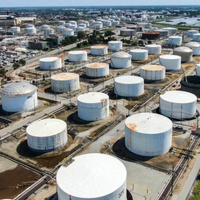
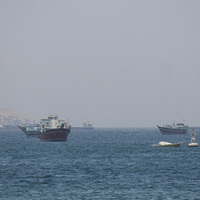
CAIRO, June 7 (Xinhua) -- Over the past three months, U.S.-Israeli strikes on Iran triggered retaliatory attacks on U.S. military bases across the Gulf and disrupted shipping in the Strait of Hormuz, sending shockwaves through global markets and regional security frameworks.
As intermittent diplomatic efforts failed to bridge differences over uranium enrichment and maritime disputes, the repercussions of the conflict have continued to unfold.
Analysts say the far-reaching confrontation has not only reshaped the geopolitical landscape of the Middle East but also undermined some regional states' confidence in external security guarantors. This, they argue, has fostered a growing recognition of the need for greater security self-reliance and more diversified strategic partnerships.
HAPPENINGS OVER PAST MONTHS
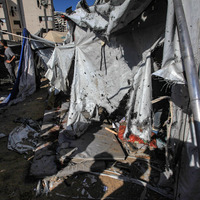
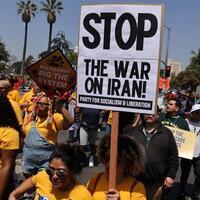
On Feb. 28, the United States and Israel launched a large-scale military campaign against Iran, striking cities across the country and primarily targeting missile sites and nuclear facilities.
Tehran responded with waves of missile and drone attacks against U.S. military bases in Kuwait, Bahrain, Qatar, Jordan, Saudi Arabia and the United Arab Emirates, before moving to tighten its grip on the Strait of Hormuz.
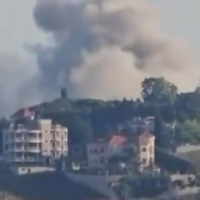
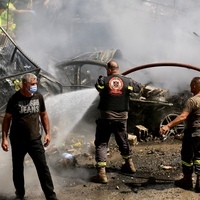
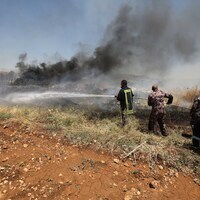
Shortly afterward, Hezbollah, acting in solidarity with Iran, launched rockets and drones into northern Israel. Israel retaliated by striking Hezbollah targets across Lebanon and subsequently intensified its bombardment and ground offensive in southern Lebanon.
Mediation efforts later brought a temporary halt to large-scale fighting. Pakistani Prime Minister Shehbaz Sharif helped broker a ceasefire between Washington and Tehran on April 8, paving the way for the highest-level face-to-face talks between the two sides in Islamabad since 1979.
However, deep disagreements over uranium enrichment, frozen Iranian assets and control of the Strait of Hormuz prevented any substantive breakthrough in the negotiations.
In the following weeks, Iran presented a revised 14-point peace proposal. Shortly afterward, the United States launched the "Project Freedom" operation in the name of guiding ships out of the Strait of Hormuz. Both sides accused each other of attacking ships near the strategic waterway.
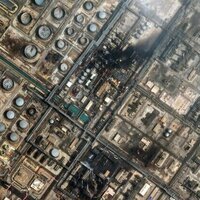
More recently, hostilities have flared up again. U.S. Central Command carried out what it described as self-defense strikes on Iran's Qeshm Island, prompting Tehran to launch fresh missile and drone attacks against U.S. bases in the Gulf.
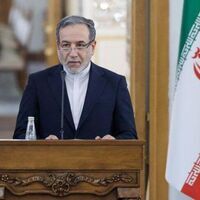
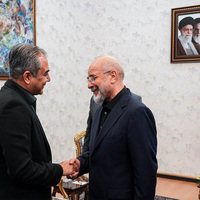
Diplomatic contacts have continued despite the renewed violence. Iranian Foreign Minister Seyed Abbas Araghchi has said Tehran and Washington remain in communication, though no major progress has been achieved.
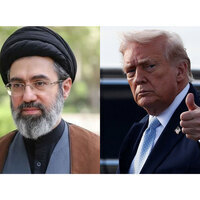
Meanwhile, U.S. President Donald Trump has indicated a willingness to meet Iran's Supreme Leader Mojtaba Khamenei if the two sides can reach a framework for a peace agreement.
REGIONAL DYNAMICS RESHAPED
The past three months have served as a geopolitical stress test, prompting countries across the Middle East to reassess the regional influence of Tehran, Washington and Tel Aviv, observers say.
Despite sustaining significant damage to its leadership structure, Iran has demonstrated considerable resilience, proving itself far more durable than many had anticipated, according to Baris Doster, an international relations scholar at Marmara University in Trkiye. He argued that the conflict has underscored the strength of Iran's institutional framework and military apparatus.
"They inflicted damage on Iran and assassinated a significant portion of its ruling cadres; however, they failed to force Iran to back down," Doster said.
Iran has evolved into a direct and resilient regional player that demands new terms for negotiations, said Jumaa Mohammed, a politics professor at Iraq's Tikrit University.
"Iran proved to be an unbreakable state, and imposed a new equation that any nuclear talks must include (a ceasefire in) Lebanon," he said.
The conflict also revealed a decline in Washington's absolute post-Cold War influence and its constrained ability to dictate regional terms, Sudanese political analyst Mohammed Hassan Saeed said, noting, "Washington now operates in a more complex environment shaped by competing regional and international interests."
The United States is transitioning from an absolute security guarantor to a reactive crisis manager, a shift that is eroding trust among its Arab allies, said Mohcine Karzazi, professor of international relations at Morocco's Hassan II University.
Israel paid a heavy price in "global reputation and army exhaustion," Jumaa Mohammed said.
WHAT TO EXPECT FOR REGIONAL SECURITY
With traditional security architectures under strain, regional states are reassessing their strategic options, experts say. Among the most notable shifts are growing skepticism toward external security guarantees and an increased emphasis on developing indigenous defense capabilities.
Confidence in U.S. security commitments among Gulf and Arab states has been significantly eroded as Washington's approach is increasingly perceived as selective and heavily centered on Israel's security interests, Doster said.
"It became evident that the United States will mobilize all its resources and capabilities solely for Israel, and that no such guarantee exists for other countries," he added.
Saeed argued that the conflict has triggered a fundamental reassessment of the U.S. security umbrella.
"For decades, many countries viewed the United States as the primary guarantor of regional stability," he said. "Recent events have raised questions about whether that model remains adequate in an increasingly multipolar world."
Against this backdrop, regional states are gradually moving toward more autonomous security arrangements, according to Khaled Hammad, a Qatar-based expert on Middle Eastern affairs.
"Regional states have become more aware of the limitations of relying entirely on external powers," he said, adding that this is encouraging efforts to develop independent regional security frameworks.
Mohammed Shaker, a researcher at the Cairo-based Middle East Forum for Strategic Studies, said the shift is likely to lead to greater investment in national defense capabilities, including air defense, intelligence, cybersecurity and domestic military industries, as well as broader international partnerships.